
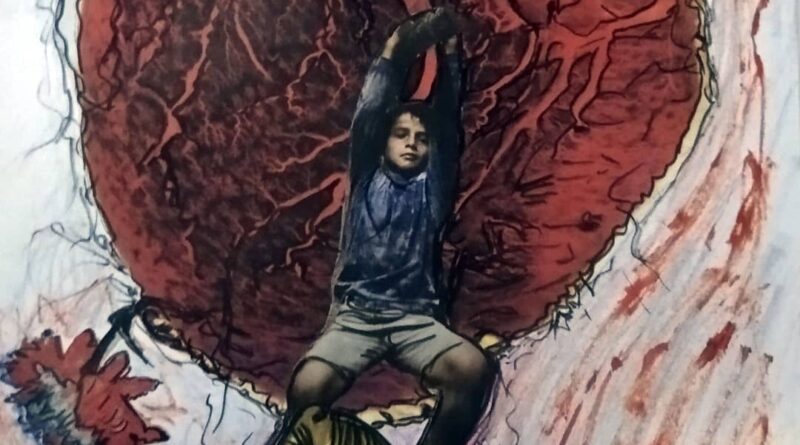
Art and Planetary Sustainability
Art and sustainable culture represent powerful expressions of humanity’s ability to inspire change and promote sustainable development. They reflect a cultural framework that recognizes the unique identity and values shaped by both the natural and social environment. At the same time, they embrace the traditional knowledge of local communities while encouraging innovative and creative initiatives that contribute to a more sustainable future for our planet.
Culture is widely recognized as one of the fundamental pillars of sustainable development, alongside the economic, environmental, and social dimensions. It strengthens social cohesion, encourages dialogue, and promotes harmonious coexistence among people. Sustainable management therefore requires minimizing our ecological footprint, maintaining a balanced relationship between nature and cultural heritage, and recognizing that the economy should serve as a means to achieve sustainable development rather than being an end in itself.
The objective is to promote cultural policies that move beyond conventional institutional approaches and recognize culture as a shared community asset—one that plays a fundamental role in strengthening identity, fostering social inclusion, and encouraging diversity and pluralism.
From this perspective, art for sustainability represents one of the essential expressions of culture. It is a creative force that transcends technical knowledge, practical tools, and purely rational thinking. As such, it becomes a driving force for building environmentally responsible economies and more sustainable societies.
As sociologist Daniel Bell observed in The Cultural Contradictions of Capitalism:
“What the artist imagines today announces the social reality of tomorrow—and helps create new realities.”
Inspired by this vision, we propose creative and non-dogmatic alternatives that encourage the development of eco-cultural environments capable of adapting to the complexity and diversity of every society.
Source: UNESCO (2026).
Collage: Carolina Marín (@collagepoetique).